
The Hollow Mountain Philosophy
When it comes to the philosophy that guides Hollow Mountain, it’s come about from a lot of what I and my team have seen and experienced both personally and professionally as teachers, moms, students, mental health workers, and in my case: my background in anthropology and a weird obsession with research.
First, I’ll tell you what our philosophy is, and then I’ll tell you what it’s based on.
What we believe
We believe that kids and teens have deep capacities for empathy, intelligence, and critical thinking, but they are being hindered by factors like excessive screen time, social isolation, a lack of opportunities for growth, and a disconnect not only from community but responsibilities to their community.
Kids need spaces where they can build and develop not just cool hobbies and academic skills, but where they can dig deep into themselves to find truth and meaning. The concept of a Hollow Mountain comes right from our Comstock traditions: digging into the mountain to unearth the value that already exists within.
I know, I know, it’s a bit philosophical and esoteric, but stay with me.
Our guiding idea is that learning is meant to be social, hands-on and challenging. To feel capable, fuel ambition, build goals and cultivate a bright outlook on the future, we need to feel that our contributions to the world mean something — that we are needed and working to the betterment of not just ourselves, but to our family and our community at large. And it all comes down to connection but most important of all: feeling useful by fostering a sense of responsibility to others.
Why we believe it
During my first semester teaching college freshman, I became increasingly aware of an alarming trend: a frightening number of my students cared about their work, showed up to class, and had graduated high school just a few months prior with flying colors — but they were completely underprepared for the environment of higher academia.
In working with those students during the day, then spending my nights digging into neuroscience research, pedagogical studies and statistical data, I came to a conclusion that has completely altered not only how I teach my students, but how I view the future of our communities and society as a whole.
There are many factors involved nationwide when it comes to the increases of violence in schools, rising levels of anxiety and depression in kids, the ever-present literacy crisis, the lack of problem-solving and critical thinking skills — but my theory focuses on three: screens, changes in socialization, and a lack of real-world responsibilities.
Screens & Social Disconnection
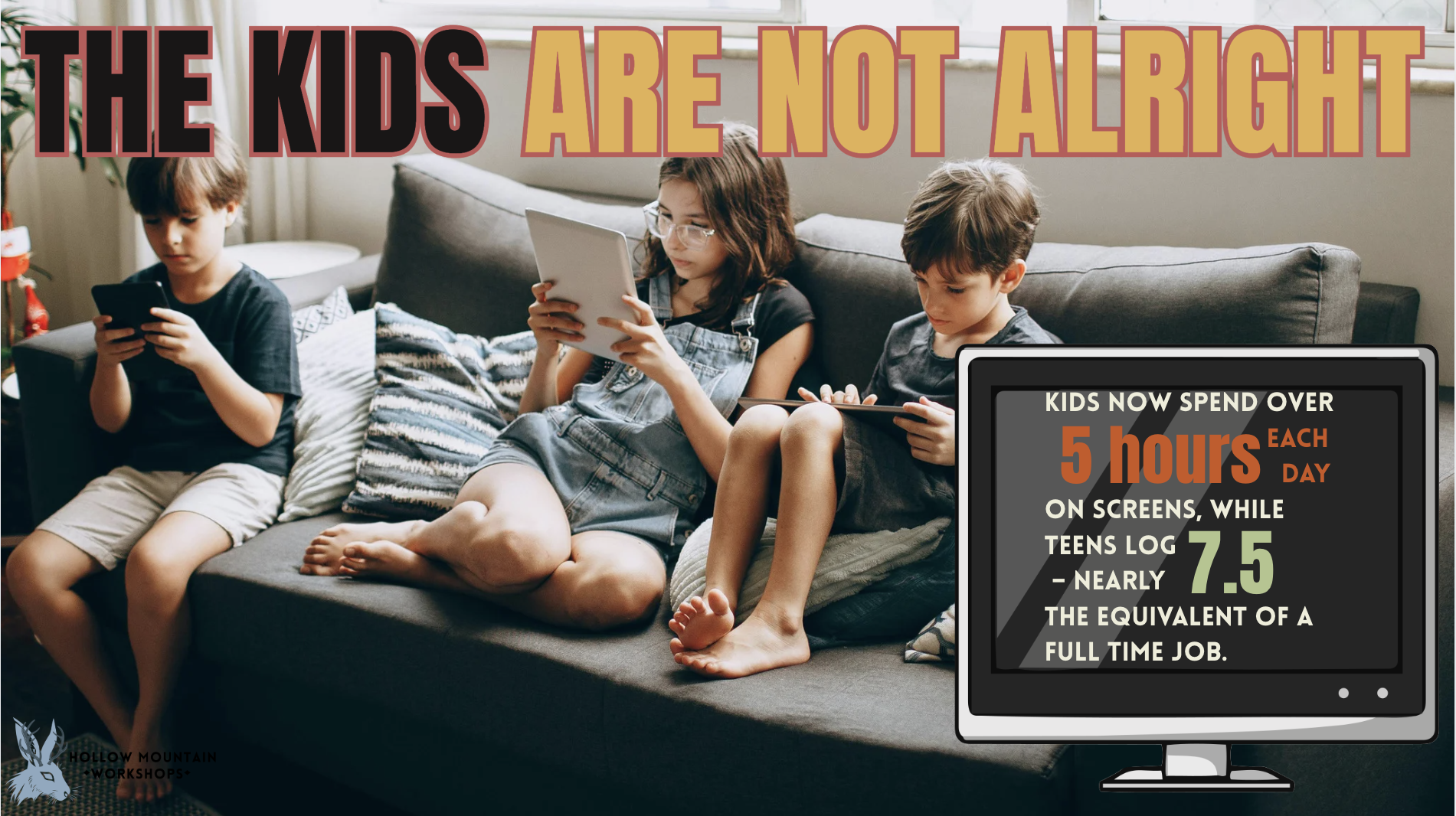
It’s not about what kids do or do not watch on screens that is devastating their cognitive reasoning skills and attention spans, but what they’re not doing while scrolling.
New research shows that high screen use in children under the age of three is irreversibly damaging their brains through a disruption of neuro-connections that set the ground work for all future learning.
Yet, despite this, a recent statistic found 40% of two-year-olds now have their own personal devices, and children and teens are spending a significant percentage of their waking hours staring at screens.
I also realized through conversations with my students that COVID affected them far more than I think most adults realize — even those of us who were sharing space with them during those years.
For many adults, COVID wasn’t just making sourdough bread or learning to knit — it was a trauma, but it was a trauma in the way that an economic downturn or a prolonged illness might be.
But for young people, it completely reshaped not only their individual lives, but society as a whole. For those students who began COVID lockdowns while in elementary or middle schools, the way they’ve expressed it to me is the equivalent to our generation’s 9/11; they see life as having a Before and an After.
And the world that exists in the After is one of staggering increases in anxiety, depression, loneliness, apathy, and a disconnection from the world at large.
A need to feel useful
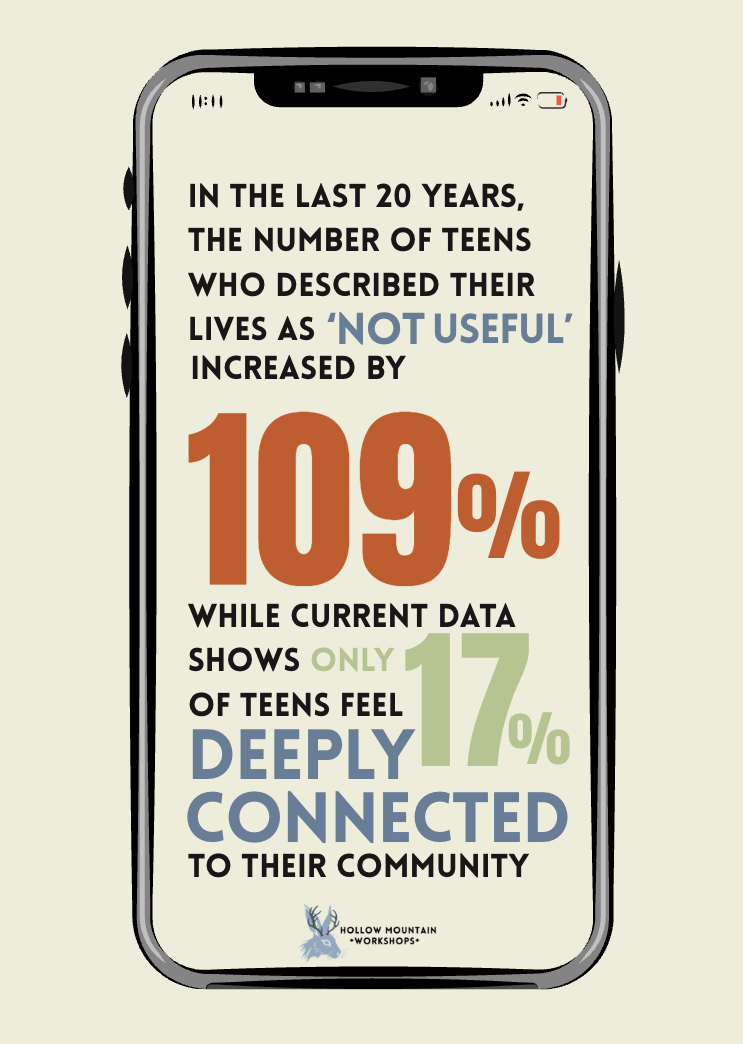
During my nights researching, there was one phrase that became burned into my brain: the number of kids reporting they believe their lives are “not useful” has been steadily increasing in recent years, and the concept behind that broke something for me.
At the basic core of humankind, we aren’t as separated from primates and other species of hominids (the category homo sapiens belong to) as you might think. And, depending on what scientific study you’re coming from, there are many arguments out there as to what “makes” us human versus animal.

However, when coming from the realm of Anthropology, what separates us isn’t just the use of tools or walking upright, it’s the invention of culture, and the ability to pass knowledge from person to person.
Meaning, learning is social: education is meant to be a collaborative activity in which we spend our time problem-solving and discussing ideas with those around us.
After discovering this awful statistic on children feeling a lack of usefulness in the world, I decided I had two choices: I could pack up my family and move away to some far flung Utopian realm where education is still valued and children still feel connected to their communities, or I could throw myself into creating that place right here in my hometown.
And so, in an act of pure desperation while clinging to a tiny shred of hope, the concept for Hollow Mountain was born.
Building Community
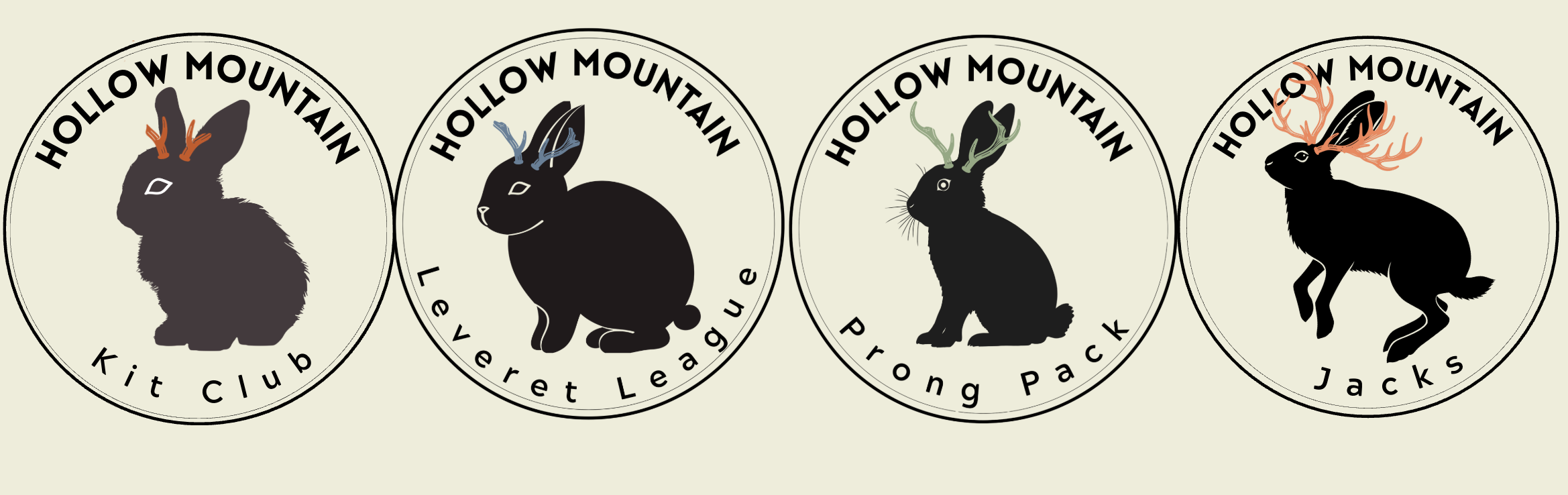
The foundation of our community is built through placing learners into one of four “teams” categorized by age: Kit Club (ages 2-5), Leveret League (ages 6-9), Prong Pack (ages 10-13) and Jacks (ages 14+). That way, our jackalopes have an instant sense of belonging by being part of a singular group — with its own adorable mascot to boot:
As our jackalopes grow within the program, they’ll also have opportunities to build leadership skills through hosting their own groups, or lending a hand in workshops with younger students.
The reason is twofold: one, because teaching both deepens our own understanding and retention of a subject by breaking knowledge into manageable chunks for others — a vital practice of critical-thinking and problem-solving skills (alongside building patience and empathy for others).
Second, because culture is passed through children, not parents.
Meaning, children are shown to learn a lot from each other and especially from slightly older peers — it’s why many parents have found themselves blue in the face trying to get their toddler to talk, but the day they stick them with a group of preschoolers, they leave babbling away. It’s also the reason why the children of immigrants often relate more to the culture of their homeland, rather than the culture of their parent’s.
In early childhood, culture and values are passed by parents, but around the time kids hit six, their perspective begins shifting towards friends, siblings and older peers.
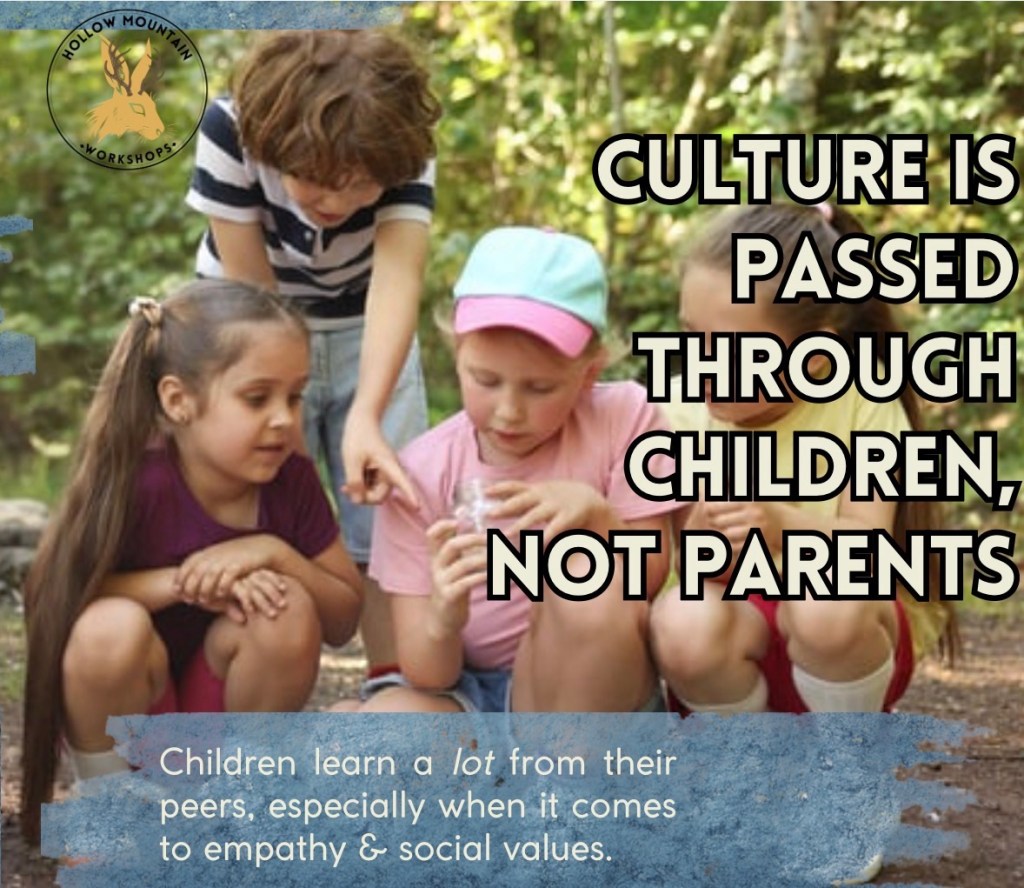
That’s why it’s imperative for both younger and older children to have opportunities to engage in mixed-age groups (under the supervision and guidance of adult mentors) in which older children and teens understand the responsibility in their roles, while younger kids have an example set for what empathy, community and a love of learning looks like.
What we do (and what you can too!)
Hollow Mountain connects working professionals and experts with small groups of students in hands-on workshops across a variety of topics including academic, creative and practical skills.
To help bridge gaps for families unable to find or afford reliable mental health services for their children, we also provide space for licensed mental health professionals to host social-emotional skill building groups.
Our workshops are just the beginning of what we want to achieve — a community built of and by kids, teens and families provided opportunities to develop a wide variety of interests while feeling connected and more importantly: useful.
In order to build that community, we need buy-in from our current community—meaning you!
If any of this has resonated with you, we’d love to have you join our community or pop in for a workshop to learn more.
– Kelsey Penrose, Hollow Mountain Founder